
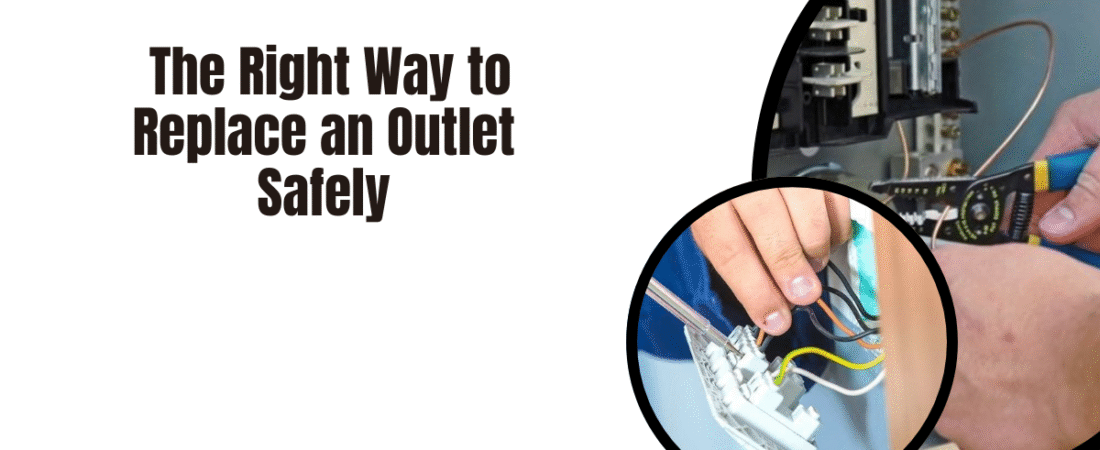
I first noticed the outlet when the plug felt loose. The room stayed quiet, but the socket looked tired. I felt a small, honest worry in my chest. I wanted a safe fix, not a fast one. I followed a careful routine that kept me calm and kept the job clean, and that routine carried me from the breaker panel to the final screw with steady hands.
Quick Answer / Summary Box
I replaced an outlet safely by turning off the correct breaker, confirming power stayed off, and working slowly with proper tools. I kept wire positions consistent, tightened terminal screws firmly, and installed the outlet straight in the box. I used a simple test at the end and watched for heat, smell, or flicker. I treated any uncertainty like a stop sign, and I stepped back before guessing.
Optional Table of Contents
This guide covered safe preparation, the step-by-step replacement flow, tool and outlet options, a copy-ready checklist, common mistakes, practical FAQ notes, trust signals, and a calm finish that closed the job.
H2: What it is (and why it matters)
Replacing an outlet meant removing a worn receptacle and installing a new one with the same circuit connections. It sounded basic, yet it carried real risk. A loose connection created heat, and heat quietly damaged plastic and insulation over time. I learned that a “working” outlet still failed in hidden ways, especially behind the faceplate where nobody looked. The job mattered because the safest electricity stayed boring, and I wanted boring back in that wall.
H2: How to do it (step-by-step)
I started at the breaker panel and switched off the circuit I believed fed the outlet. I verified the outlet stayed dead using a simple tester, and I checked twice because confidence felt cheap. I removed the faceplate, then backed out the mounting screws and eased the outlet forward with slow pressure. I noted wire placement, then loosened screws and freed the conductors without bending them too hard. I connected the new outlet the same way, tightened each terminal, folded wires neatly, mounted the outlet straight, and restored power only after everything sat secure in the box.
H2: Best methods / tools / options
I relied on a few tools that made the work safer and less shaky. A non-contact voltage tester gave quick reassurance, and a plug-in tester helped confirm correct wiring after power returned. Needle-nose pliers guided stiff conductors, while a proper screwdriver fit the terminals without stripping them, which felt like small mercy. For outlet options, I used a standard tamper-resistant receptacle for general rooms, and I treated GFCI outlets as a special case for damp areas where protection mattered more than convenience. I also preferred screw terminals over quick backstabs, because the screw connection felt more honest over years.
H2: Examples / templates / checklist
I followed a checklist that kept me steady, and it prevented the usual rushed mistakes. I turned off the breaker, confirmed zero power at the outlet, and removed the cover plate. I pulled the old outlet forward, photographed the wiring positions, and released each conductor carefully. I matched hot to brass, neutral to silver, and ground to green, and I tightened each screw until it felt snug and final. I tucked wires back with gentle folds, mounted the outlet flush, replaced the plate, restored power, and tested the outlet before I called it done.
H2: Mistakes to avoid
I avoided working on a live circuit, even for a moment, because one lazy second ruined a day. I also avoided mixing wire positions “because it looked right,” since that guess often created reversed polarity. I kept the ground connected, not optional, and I ensured no bare copper touched the box or another terminal. I avoided backstabbing wires into push-in holes when a solid screw connection existed, since loose contact caused heat. I also avoided overtightening so hard that I damaged threads, because that sort of force felt brave but acted careless.
H2: FAQs
When a breaker label felt wrong
I treated the panel label like a suggestion, not a fact. I turned off what I thought matched, then verified at the outlet. If the tester still showed power, I turned it back on and tried another circuit with patience. I wrote a corrected label afterward, which saved future me from the same small confusion.
When wire colors did not match expectations
I stayed calm and focused on function, not only color. I used testing and careful observation to confirm which conductor acted as hot and which acted as neutral. I kept connections consistent with the original, unless the original looked unsafe or incorrect. I also considered professional help when the wiring felt unusual, because the wall sometimes held surprises.
When the box felt crowded
I resisted forcing everything back with pressure. I folded conductors in smooth bends and kept the ground wire positioned to avoid touching hot screws. If the box stayed overfull, I paused and considered that a deeper fix might be needed. I learned that cramped boxes invited loose connections, and loose connections invited heat.
Trust + Proof Section
I handled the replacement the way I handled any job that involved real risk, with quiet repetition and checks. I moved slowly, listened for odd buzzing, and paid attention to smell, because burning plastic carried a sharp warning that never lied. I also watched the outlet for warmth during the first use, and I felt relief when it stayed cool and steady. I noted the breaker number and the outlet date in my home notes, which felt nerdy but useful later. Author bio: I wrote as a practical homeowner who valued safe routines over shortcuts, and I stayed consistent with basic electrical safety habits from start to finish. Updated date: 12 January 2026.
Conclusion
I finished by tightening the last screw and stepping back. The outlet sat straight and firm, and the room felt normal again. I kept the best next step simple: I tested the outlet again after a day of use and stayed alert for heat or looseness. If you wanted a clean follow-on task, you could build a small home safety checklist that covered outlets, plates, and breaker labels in one sweep, because small fixes often prevented big repairs.