
I remembered the first time a toilet kept refilling at night. The sound felt small, but it never stopped. I stood there in the dim bathroom light and listened, half annoyed and half nervous. I learned fast that a tired fill valve often caused that steady whisper. I replaced it the right way, and the room finally went quiet again.
Quick Answer / Summary Box
I replaced a toilet fill valve by shutting off the stop valve, draining the tank, disconnecting the supply line, removing the old valve, and installing a new one with the correct height and seal. I tightened the lock nut carefully, then reconnected the line and tested for leaks in slow steps. I adjusted the water level to the mark, and I set the refill tube correctly into the overflow pipe. I finished by watching one full refill cycle, then another, until the tank stayed still.
Optional Table of Contents
This post covered what a fill valve did, why it failed, and how I replaced it safely. It walked through tools, step-by-step actions, and small checks that prevented leaks. It included options for different toilets, plus a checklist and examples. It ended with common mistakes, practical FAQs, and a short trust note.
H2: What it is (and why it matters)
A toilet fill valve controlled how water entered the tank after a flush. It opened, filled, then shut off at a set water level. When it wore out, the tank refilled too often, or filled too slowly, or never stopped. I noticed the wasted water first, then the stress later. A good replacement made the toilet calmer, and it also protected floors from a silent drip.
H2: How to do it (step-by-step)
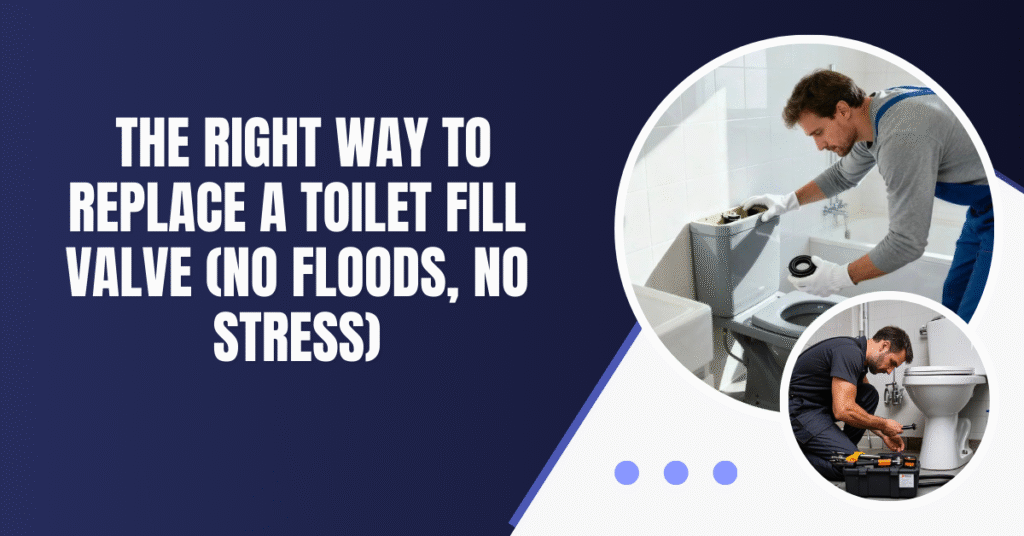
I started by turning off the stop valve behind the toilet, and I flushed once to drain most water. I held the handle down to empty more, then I soaked the last puddle with a towel. I removed the tank lid and set it on a safe surface, because porcelain chipped easily. I checked the refill tube and the float, then I took a quick photo for memory, and that small habit saved me later.
I disconnected the supply line under the tank with an adjustable wrench, and I kept a bowl beneath it. I loosened the lock nut that held the fill valve shank, and I steadied the valve from inside the tank. I pulled the old valve up and out, and I wiped the tank hole clean. I checked for gritty buildup, because it made seals sit wrong. I also felt a bit relieved when the hole looked smooth.
I set the new fill valve height before I installed it, and I matched it to the overflow tube level. I kept the top of the valve slightly above the overflow, but not so high that the lid touched. I placed the rubber washer on the shank as the instructions implied, then I inserted the valve through the tank hole. I hand-tightened the lock nut first, then I snugged it with a wrench. I avoided over-tightening, since that cracked tanks on a bad day.
I reconnected the supply line and turned the stop valve on slowly. I watched the shank area like a hawk, and I ran my fingers around it to feel moisture. I connected the refill tube to the valve nipple, and I clipped it to the overflow tube without pushing it down inside. I adjusted the float or screw so the water line stopped at the mark, or a little below it. I flushed twice and waited, then I wiped everything dry to confirm the calm stayed.
H2: Best methods / tools / options
I relied on a simple adjustable wrench, slip-joint pliers, a small bucket, and a sponge. I used a flashlight too, because the space behind the toilet stayed gloomy. I kept a thin towel under the supply connection, and it caught the surprise drips. Those tools felt basic, yet they acted like a safety net. I also kept a spare rubber washer, since a tiny ring sometimes decided the whole outcome.
I chose a universal fill valve that adjusted in height, and it fit most standard tanks. That option suited a quick replacement and a normal household setup. A quieter valve design helped when the bathroom sat near bedrooms, since it reduced the sharp refill sound. A premium valve cost more, but it usually felt smoother to adjust and steadier to shut off. I still picked based on fit and reliability, not shiny packaging.
I considered the water supply line as an option too, because old braided lines sometimes leaked after being disturbed. Replacing the line felt smart if it looked corroded or stiff. I also kept thread seal tape nearby, though many modern connectors were sealed with rubber and did not need tape. I followed the seal type in front of me, not a habit. That approach kept me from forcing the wrong fix on the right part.
H2: Examples / templates / checklist
I remembered one toilet that refilled every ten minutes, and the bowl water stayed still. I replaced the fill valve and the refill tube clip, and the ghost refills stopped. I also adjusted the water level slightly lower, and the flapper stayed seated better. The bathroom sounded normal again, and that felt oddly comforting. The change looked small, but the quiet stayed.
I followed a short checklist that kept me steady when my hands rushed. I shut the stop valve fully, then I drained the tank and protected the floor. I removed the old valve, cleaned the hole, and set the new valve height before tightening. I reconnected the line, filled slowly, and checked for leaks with fingers and paper. I tested two full flush cycles, and I ended by wiping everything dry.
H2: Mistakes to avoid
I avoided wrenching the lock nut too hard, because that stressed the tank base. I also avoided letting the refill tube sit below the water line, since that risked back-siphon issues and strange bowl behavior. I did not ignore tiny drips, because they grew when pressure settled in. I also did not skip the slow turn-on of the stop valve, and that patience prevented a messy surprise. I learned that speed looked brave, but it leaked more.
I avoided setting the fill valve too high, because the lid sometimes pressed it and caused rubbing. I avoided leaving grit under the washer, because it made a slow seep that showed up hours later. I did not reuse a cracked washer, even when it looked almost fine. I also did not twist the valve body while tightening from below, because it misaligned the seal. I treated the seal like a quiet contract, and I kept it clean.
H2: FAQs
Refill tube placement stayed correct and safe
I clipped the refill tube above the overflow opening, and I kept an air gap. I avoided pushing the tube down inside the overflow pipe. That small detail prevented odd siphoning behavior and kept the refill steady.
Water level adjustment looked precise and repeatable
I adjusted the float so the shutoff line stayed slightly below the overflow rim. I used the tank’s waterline mark when it existed. I tested after each adjustment, because one turn changed more than expected.
Persistent running got solved after replacement
I checked the flapper and chain if the toilet still ran. I confirmed the new valve shut off cleanly and the refill tube did not spray wildly. I also verified the flush handle did not stick, since that mimicked a valve problem.
Small leaks after installation got handled calmly
I tightened the lock nut in tiny increments if I found moisture, and I stopped once it stayed dry. I checked the supply connector washer, because it often causes drips. I dried the area and rechecked after ten minutes, and then again after an hour.
Trust + Proof Section
I handled this kind of replacement in ordinary homes, usually after the first annoying night refill sound. I learned to work slowly, to listen, and to watch where water wanted to escape. I trusted touch as much as sight, since fingertips detected a slick film before a drip formed. I wrote this guide in the same careful order I followed on a real floor with a towel and a bucket. Author: Sam. Updated date: 2025-12-30.
Conclusion
I replaced a toilet fill valve by treating it like a small system with one job. I shut off water, drained the tank, installed the valve at the right height, and tested in patient cycles. The work felt simple, but the checks made it safe. If the toilet still acted strange, I moved next to the flapper and the supply line, since those parts often teamed up with the valve. I kept the checklist nearby, and the bathroom stayed quiet again.