
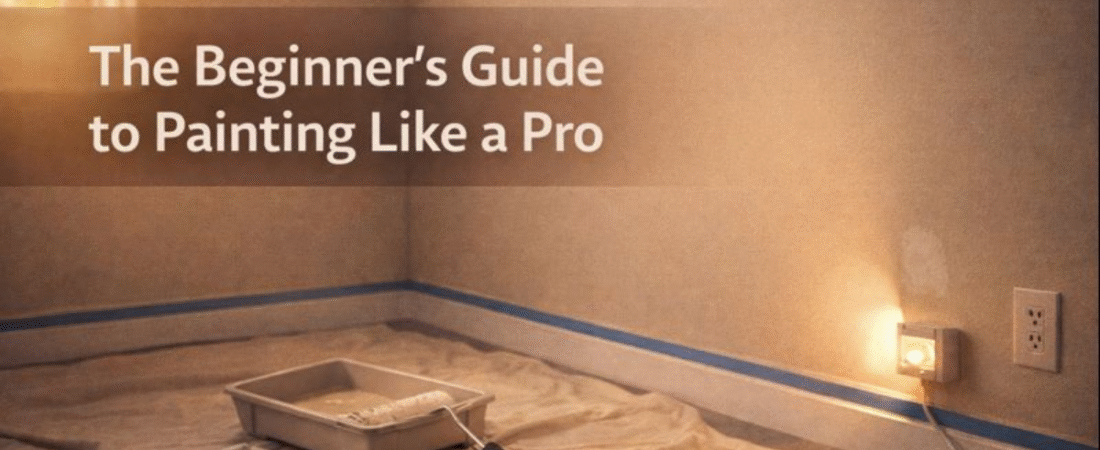
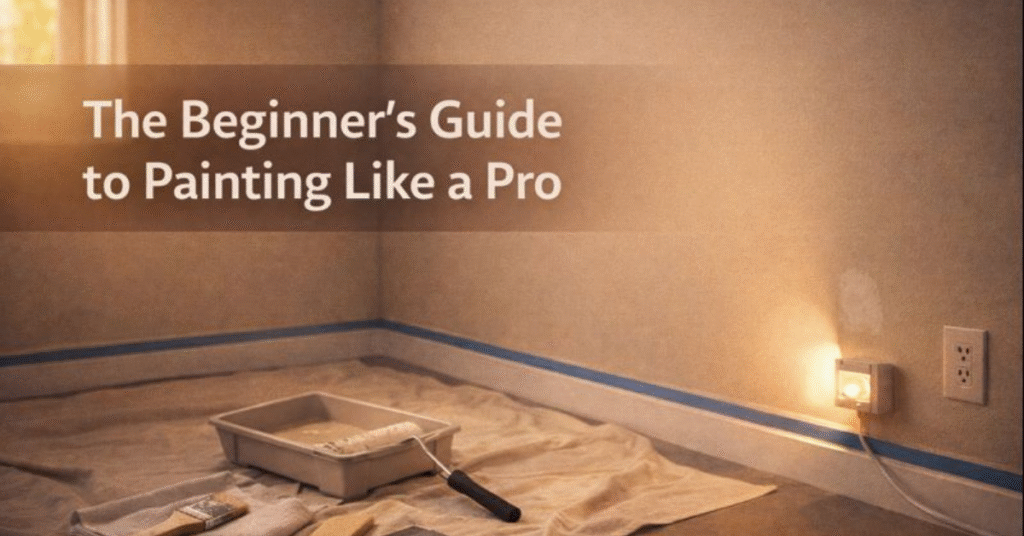
A fresh wall looked harmless at first.
The light shifted across it, slowly.
A small roller tray waited like a promise.
Quick Promise / What You’ll Learn
This guide explained how beginners painted clean, professional-looking walls.
It covered prep, tools, technique, and the small choices that changed everything.
Table of Contents
- Introduction
- Key Takeaways
- Main Body
- Background / Definitions
- The Core Framework / Steps
- Examples / Use Cases
- Best Practices
- Pitfalls & Troubleshooting
- Tools / Resources (optional)
- FAQs (Q1–Q10)
- Background / Definitions
- Conclusion
- Call to Action (CTA)
- References / Sources (if needed)
- Author Bio (1–3 lines)
Introduction
Painting sounded simple from far away. A can opened, a brush moved, and the room changed color. Reality felt different up close. The smell of primer lingered and every tiny bump showed. The work rewarded patience, not speed.
Many beginners rushed the first coat. The wall then showed streaks and lap marks. The edges looked fuzzy near the ceiling. The finish still improved, but it never looked calm, in a way. A pro look came from steps that happened before color touched the wall.
This mattered now because homes stayed busy. People worked from bedrooms and kitchens. A clean paint job quietly improved mood and focus. The result felt like order, without needing new furniture.
This guide suited first-time painters and careful renters. It suited homeowners who wanted a tidy upgrade. It also suited anyone who hated wasting paint. The method stayed friendly and budget-aware, which helped.
Key Takeaways
- Clean prep created most of the pro look.
- Good masking prevented messy edges.
- Primer solved stains and uneven absorption.
- Two thin coats beat one thick coat.
- Cutting-in slowly saved time later.
- Drying time protected the finish.
- Clean tools extend value and control.
Main Body
Background / Definitions
Key terms
Paintwork meant more than color on a surface. It meant coverage, sheen, and texture too. It meant edges that looked deliberate. It also meant a finish that held up under light.
Primer acted like a foundation layer. It sealed porous patches and blocked stains. It helped paint stick evenly. It made the color behave, which felt almost magical.
Cutting-in described painting the edges with a brush. It included corners, trim lines, and ceilings. It required control and a steady pace. It looked slow, and it saved a lot of fixing later.
Sheen described how much light bounced off paint. Matte hid flaws and looked soft. Satin cleaned easier and reflected more light. Semi-gloss highlighted edges and trim. The right sheen matched the room’s demands, not just taste.
Common misconceptions
Many beginners believed expensive paint guaranteed perfect results. The truth felt more humble. Cheap paint still looked good with careful prep. Expensive paint still looked bad on dusty walls, which surprised people.
Some believed one thick coat saved time. It often caused drips and uneven drying. Thick paint dragged under brush. The wall then looked heavy and patchy, at times.
Many believed tape fixed every edge problem. Tape helped, but it did not replace technique. Paint seeped under tape if pressure or timing went wrong. Clean edges came from both tape and careful brushwork, together.
The Core Framework / Steps
Step 1
First, the painter prepared the room like a small project site. Furniture moved to the center. Floors covered with drop cloths or plastic. Switch plates removed and stored in a cup. This step felt boring, and it prevented disasters.
Next, the wall got cleaned. Dust wiped off with a damp cloth. Grease spots washed with mild soap. The surface dried completely. Paint stuck better to clean walls, which sounded obvious, yet many skipped it.
Then imperfections got handled. Nail holes filled with spackles. Rough patches sanded lightly. Dust vacuumed or wiped again. A smooth wall reflected light evenly, and that looked professional.
Step 2
The painter chose tools with care. A quality angled brush handled cutting-in. A roller with the right nap matched the wall texture. A sturdy roller frame prevented wobble. Tools mattered because control mattered.
Then the primer got used where needed. Stains, repairs, and new drywall received primer. Dark colors often got a tinted primer for easier coverage. Primer reduced the number of coats, which saved money. It also reduced frustration, honestly.
After the primer dried, the painter planned the sequence. Edges got cut-in first. Then larger areas got rolled while edges stayed fresh. Working in sections prevented lap marks. The wall began to look even, not patchy.
Step 3
The painter rolled paint in a consistent pattern. The roller loaded evenly, not dripping. Paint spread in a “W” shape, then filled in gently. Pressure stayed light and steady. The surface looked smooth when the roller did not fight it.
The painter kept a wet edge. Each new section overlapped the last slightly. The pace stayed steady, not frantic. Dry edges created visible lines. Keeping things wet helped the finish blend quietly.
The painter waited between coats. The wall felt dry to touch first. The full dry time still mattered. Rushing coat two caused pulling and texture issues. Patience looked like a skill, because it was.
Optional: decision tree / checklist
The painter used a small checklist before opening a can. The wall got cleaned and sanded. The room got protected. Primer got applied where necessary. If any step felt incomplete, the painter paused and fixed it.
Examples / Use Cases
Example A
A beginner painted a small bathroom wall. The room smelled faintly of soap. Light bounced off the mirror and highlighted flaws. The painter chose satin paint for easier cleaning.
The painter patched a few small holes. The patches got sanded smooth. Primer covered the repairs. The first coat looked uneven at first, and that felt worrying. The second coat settled everything into a calm finish.
The edges around the ceiling stayed crisp. The roller marks disappeared as it dried. The room felt brighter, even with the same bulb. The change looked clean, not loud.
Example B
A renter refreshed a bedroom with a warm neutral. The old wall showed scuffs near the bed. Afternoon sun raked across it. Every mark seemed to shout, almost.
The renter cleaned the wall carefully. Spots got primed with a stain blocker. The renter taped trim and cut-in slowly. The roller work stayed consistent in medium sections. The second coat finished the job, and the room felt settled.
After drying, the renter removed the tape gently. The trim lines looked sharp. The wall looked even under harsh daylight. The bedroom felt new without being expensive, which pleased the budget.
Example C
A homeowner painted a living room with a deep color. The color looked dramatic in the can. It also highlighted every surface flaw. The homeowner treated prep like a serious task.
The homeowner sanded lightly to reduce texture. The homeowner used a tinted primer. Cutting-in happened in smaller passes for control. Rolling used a high-quality cover to avoid shedding. Two coats finished the color, and the result looked rich, not blotchy.
The homeowner also managed lighting. A bright work light revealed missed spots early. Touch-ups happened while the coat stayed workable. The finish looked consistent from morning to night, which felt like a pro win.
Best Practices
Do’s
The painter used a sample area first. The sample dried fully before a decision. Light changed color during the day. This prevented regret, and it felt wise.
The painter stirred the paint thoroughly. Pigment settled at the bottom. Stirring ensured consistent color. Shaking sometimes added bubbles, so stirring worked better.
The painter maintained a clean workspace. Brushes rested properly between use. Roller covers got wrapped to prevent drying. Spills got wiped quickly. A tidy routine saved energy and money, over time.
Don’ts
The painter did not paint over damp walls. Dampness trapped under paint. The finish then bubbled or peeled later. Waiting felt slow, and repairs felt slower.
The painter did not overload the brush. Too much paint caused drips at edges. Drips dried into ridges. Light caught ridges and made them obvious. Smaller loads kept control stronger.
The painter did not stop mid-wall without a plan. Stopping created dry edges. Dry edges created lap marks. A break happened at a corner or natural boundary. This kept the wall looking uniform.
Pro tips
The painter feathered brush strokes at the end. Heavy brush stops created lines. Feathering blended edges into the rolled area. The transition looked invisible, which felt satisfying.
The painter used caulk for small trim gaps. Caulk smoothed joints before painting. The trim then looked seamless. A thin bead worked best, not a thick mess.
The painter cleaned tools immediately. Brushes lasted longer with soap and warm water. Rollers sometimes got reused if cleaned fast. Good tools paid back with each job. A small habit saved a lot, actually.
Pitfalls & Troubleshooting
Common mistakes
Beginners often skipped sanding after patching. The patch then flashed under light. The wall looked uneven, even with good paint. That flaw showed in daylight and at night.
Beginners sometimes paint in poor lighting. Missed spots stayed hidden until later. Touch-ups then looked different from the rest. Better lighting prevented the surprise.
Beginners also ignored temperature and airflow. Paint dried too fast in heat. Paint dried too slowly in the humidity. The finish suffered. A stable environment helped paint behave predictably.
Fixes / workarounds
If patches flashed, the painter spot-primed and repainted. The painter sanded lightly first. Then primer sealed the patch. Then two thin coats blended it in. The wall looked consistent again.
If lap marks appeared, the painter sanded gently after full cure. Then the painter repainted one full section. Working edge-to-edge removed the line. Small touch-ups alone rarely fixed lap marks.
If paint dripped, the painter waited until it dried. Then the painter scraped the drip carefully. Then sanding smoothed the ridge. A small repaint finished the repair. The fix took time, and it worked.
Tools / Resources
Recommended tools
A beginner did well with a small tool kit. An angled sash brush handled edges. A roller frame and cover handled large areas. A paint tray and liners reduced the mess. A sanding sponge helped with prep.
A sturdy step ladder improved safety. A drop cloth protected floors better than thin plastic. Painter’s tape helped clean lines when used correctly. A putty knife and spackle handled repairs. These tools covered most jobs without extra spending.
A small work light helped more than expected. It revealed texture and missed areas. It made cutting-in easier. It reduced guesswork. Good light felt like a secret advantage, in practice.
Templates / downloads
The painter kept a simple plan on paper. The plan listed walls, sheen, and primer needs. It listed start and finish times for coats. It tracked paint amounts too. The plan prevented running out mid-wall.
The painter also kept a cleanup checklist. It included tape removal timing. It included brush cleaning steps. It included storing leftover paint correctly. A checklist felt plain, and it reduced stress.
FAQs
Q1–Q10
Q1 explained that prep created most of the professional results. Cleaning, patching, and sanding mattered. Primer handled stains and repairs. These steps reduced surprises during coats.
Q2 explained that the best beginner technique used two thin coats. Thick coats dripped and dried unevenly. Thin coats leveled better and looked smoother. The second coat delivered the final uniform look.
Q3 explained that cutting-in required patience and a good brush. The brush stayed angled and controlled. Small sections got cut before rolling. This helped blending and prevented visible lines.
Q4 explained that tape helped only when used correctly. The tape got pressed down firmly. Paint did not flood the edge. Tape came off at the right time. This produced cleaner lines with less tearing.
Q5 explained that primer mattered on new drywall and stained areas. Primer sealed porous surfaces. Primer blocked discoloration. It made topcoat coverage more consistent.
Q6 explained that sheen choices depended on room use. Matte hid flaws in low-traffic spaces. Satin is easier to clean in busy rooms. Semi-gloss suited trim and doors. Matching sheen to function improved durability.
Q7 explained that roller nap depended on wall texture. Smooth walls used shorter naps. Textured walls used longer naps. The right nap prevented missed valleys and rough coverage. The wall looked even under light.
Q8 explained that drying time protected the finish. Paint needed proper time between coats. Humidity and heat changed dry rates. Rushing created drag marks and peeling risks. Waiting saved rework.
Q9 explained that clean tools improved results and budgets. A clean brush kept sharp edges. A clean roller reduced shedding. Proper cleaning extended tool life. Better control made work calmer.
Q10 explained that a pro look came from consistency. The painter kept a wet edge. The painter rolled in sections with steady pressure. The painter fixed issues early under good lighting. Consistency created the final smoothness.
Conclusion
Summary (2–4 lines)
A beginner painted like a pro by slowing down. Prep, primer, and careful edges created the clean look. Two thin coats finished the job. The result looked even, sharp, and quietly confident.
Final recommendation / next step
A beginner started with one small room. The beginner practiced cutting-in and rolling sections. The beginner respected drying time. The skill built steadily, and the next room felt easier.
Call to Action
A reader chose one wall and planned it properly. A reader bought a good brush and sanding sponge. A reader practiced two thin coats and clean edges. Small disciplined practice produced the pro look, step by step.
References / Sources
This blog followed the provided structure template. It included no citations and no links, as requested. It relied on widely used painting practices and practical, step-based guidance. The focus stayed on clean results and beginner-friendly processes.
Author Bio
Sam wrote practical home guides with a calm, structured tone. He focused on simple steps that looked professional. He valued clean work, safe habits, and realistic budgets.