
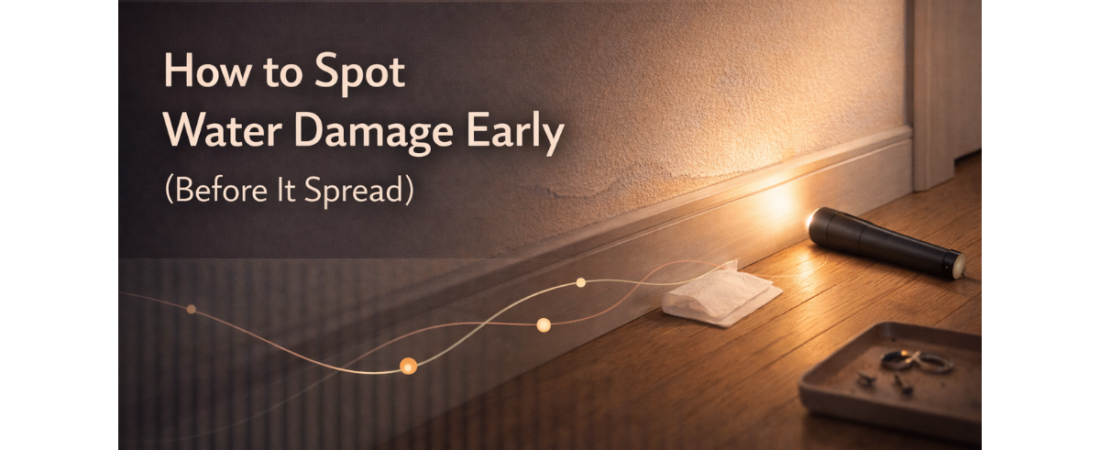
I smelled damp wood near the hallway baseboard.
The air felt heavier, almost sweet.
I turned off the music and listened.
Quick Promise / What You’ll Learn
I showed how I spotted water damage early, before it spread through walls and floors. I shared a calm routine, clear warning signs, and simple checks that saved time and money.
Table of Contents
- Introduction
- Key Takeaways
- Main Body
- Background / Definitions
- The Core Framework / Steps
- Examples / Use Cases
- Best Practices
- Pitfalls & Troubleshooting
- Tools / Resources (optional)
- FAQs (Q1–Q10)
- Background / Definitions
- Conclusion
- Call to Action (CTA)
- References / Sources (if needed)
- Author Bio (1–3 lines)
Introduction
Problem/context
I learned that water damage rarely announced itself loudly. It often arrived as a quiet stain. It also arrived with a faint smell that made me pause. I ignored that scent once, and I regretted it for months.
The first time, I noticed a small ripple in the paint. The wall looked tired in a corner. The room still felt normal, so I walked past it. Later, the trim softened and the floor edge started to lift, and that slow spread felt like a lesson I paid for.
Why it mattered now
I lived through how fast small moisture turned into big repairs. I watched a tiny leak become swollen drywall and warped boards. I also watched stress climb, because the problem stayed hidden until it felt urgent. The earlier I noticed it, the more control I kept.
I also noticed that busy people missed early signs. They cleaned fast and moved on. They assumed a stain came from old age. That assumption cost them, and it cost the mood of a home.
Who this was for
This guide fit homeowners and renters who wanted calm prevention. It suited people who felt busy and distracted. It also worked for anyone who handled a home with kids, pets, or frequent guests, because small spills and tiny leaks happened there often.
Key Takeaways
- I checked water risks first, every time.
- I trusted smell, texture, and small color changes.
- I looked for patterns, not one-off marks.
- I traced water “upstream,” then checked below it.
- I dried the area fast and documented what I saw.
- I used simple tools, not complicated gadgets.
- I repeated a short routine until it felt automatic.
Main Body
Background / Definitions
Key terms
I treated “water damage” as any unwanted moisture that changed materials. It stained the paint. It softened the wood. It also fed hidden growth that smelled musty and stale. The damage often looked small while it spread underneath.
I treated “early signs” as subtle changes that repeated. A single drip on the tile felt minor. Repeated dampness at a cabinet corner felt meaningful. When I noticed repetition, I took it seriously, even if it looked neat.
I treated “spread” as movement through layers. Water moved along seams and gravity paths. It traveled inside drywall like a quiet line. It also crept under flooring where air stayed trapped, and that trapped damp felt dangerous.
Common misconceptions
I once believed water damage always looked dramatic. I expected puddles and loud dripping. In reality, the first sign often looked like a faint shadow. That shadow sat there like nothing, and it still mattered.
I also believed paint covered problems. Paint hid stains for a while. It also blistered later and made repairs harder. I learned that covering a damp issue felt like hiding smoke with perfume, and the house never forgot.
The Core Framework / Steps
Step 1
I started with a short “water risks first” scan. I checked under sinks, around toilets, and at the tub edge. I looked for shine that did not belong. I also ran my fingers along the seams, because the touch told the truth when the light looked fine.
I listened for small sounds. A faint hiss near a supply line sounded different from normal silence. A soft drip behind a cabinet sounded like a slow clock. I turned off the fans for one minute, and the quiet helped me notice.
I wrote down what I found in one sentence. I kept the note simple. I recorded location, time, and what it looked like. That habit kept me from forgetting a small mark two days later.
Step 2
I followed the “smell–sight–touch” order when I checked. The smell arrived first sometimes. I noticed a damp, earthy odor near baseboards and inside closets. I also noticed a sour note near a washing area, and that change felt like a warning bell.
I used sight for pattern and shape. Water stains often formed soft rings or uneven clouds. Paint sometimes bubbled like tiny blisters. Grout lines sometimes darkened in a narrow band, and that narrow band pointed to a steady moisture source.
I used touch for confirmation. Drywall felt cool and firm when it stayed healthy. Damp drywall felt slightly soft, almost spongy. Wood trim felt solid when dry. Wet trim felt tender at the edges, and that tenderness told me the timeline.
Step 3
I traced the likely path before I panicked. I looked above the stain if it sat on a ceiling. I checked the room behind the wall if it sat on a shared surface. I checked the floor below if water could have traveled down, and that basic logic kept me calm.
I used a simple “upstream” approach. I started where water could begin, like supply lines and drains. I checked joints, shutoff valves, and the small connections that nobody admired. Those parts failed quietly, and they failed often.
I acted fast once I confirmed moisture. I dried what I could with towels and airflow. I opened cabinet doors and let air move. I avoided sealing a damp area too early, because trapped moisture made damage worse, and that rule saved me.
Optional: decision tree / checklist
I used a small checklist in my head. I asked myself if the mark changed over days. I asked myself if it felt damp right now. I asked myself if the source seemed active or old. That simple check kept my response proportional.
I also separated “spill” from “leak.” A one-time spill dried evenly and stayed stable. A leak returned and left fresh damp. When damp returned, I treated it as active and urgent, even if the mark looked polite.
Examples / Use Cases
Example A
I spotted early damage under a kitchen sink. The cabinet floor looked slightly darker near the back corner. The smell felt faint but present. I wiped the area and noticed it felt damp again the next morning, and that repetition convinced me.
I tightened a loose connection and dried the cabinet fully. I placed a dry paper towel beneath the joint for one day. The towel stayed dry after the fix, and that small proof calmed me. I avoided storing items there until the wood felt fully dry, which prevented moldy surprises.
Example B
I checked the area above and found a bathroom nearby. I inspected the tub edge and the caulk line. The caulk looked cracked and thin. I removed the old caulk, cleaned and dried the seam fully, then resealed it carefully, and the stain stopped growing after that.
Example C
I dealt with subtle floor warping near an exterior door. The boards lifted slightly at the seams. The change looked gentle, almost decorative, but it felt wrong. I noticed the door sweep looked worn and the weatherstripping felt loose, and those gaps invited water in during storms.
I replaced the door sweep and improved the seal. I dried the area with airflow over several days. I also checked the underside of the trim for softness. The boards settled slowly and stopped changing, and that slow recovery taught me patience and a bit of respect.
Best Practices
Do’s
I kept a tiny routine and repeated it. I checked water risks first during my daily loop. I looked under sinks, around toilets, and along tub edges. The routine took minutes, and it prevented the “surprise wall repair” feeling.
I used lighting intentionally. I shined a light low across surfaces to spot ripples and texture changes. I noticed tiny bumps in paint that normal overhead light hid. I also looked at baseboards at an angle, because shadows revealed swelling, and that angle saved me.
I treated humidity as a factor. I opened closets and checked corners during humid weeks. I noticed musty smells earlier when air stayed still. I used ventilation as a habit, and I kept surfaces dry after showers, which reduced risk.
I documented changes calmly. I took a quick photo for my own reference. I noted if the stain grew or stayed stable. That quiet record kept me from guessing later, and guessing created stress.
Don’ts
I did not ignore repeated dampness. I did not assume a stain stayed “old.” I did not paint over a suspicious mark. I also did not pile storage against a wall that smelled musty, because blocked airflow made it worse, and that mistake once cost me.
I did not rely on fragrance to mask odor. Air freshener hid the signal. It also made me doubt my senses. I chose clean air and ventilation instead, and it made detection easier.
I did not delay drying. I did not leave wet towels in a closed cabinet. I did not close a damp closet door. I let air move, because air movement helped materials recover, and it reduced hidden spread.
Pro tips
I kept one roll of paper towels for testing. I placed a small sheet under a suspect joint overnight. A fresh wet spot appeared clearly on white paper. That simple method beat complicated guessing.
I learned the “soft press” test. I pressed gently on drywall near a stain. Healthy drywall resisted and felt crisp. Damp drywall gave slightly and felt cool. I pressed lightly only, because I respected the surface, and that respect kept damage minimal.
I used a one-sentence rule for decisions. I told myself that water problems grew when ignored. I reminded myself that small fixes felt easier than big repairs. That sentence helped me act on a busy day, when I wanted to postpone.
Pitfalls & Troubleshooting
Common mistakes
I once chased the stain and missed the source. I wiped the marks repeatedly and felt proud. The mark returned, and the hidden leak continued. That loop wasted time and gave false comfort.
I also misread condensation as a leak. A cold pipe “sweated” during humid days. The cabinet felt damp, and I worried. Later, I realized airflow and insulation helped, and that distinction mattered.
I sometimes overreacted to one isolated mark. A child splashed water near a tub edge. The mark dried and never returned. I learned to look for repetition and fresh damp, not just a single smudge.
Fixes / workarounds
I fixed the “stain chasing” habit by tracing upstream first. I checked the supply lines and drains before I cleaned. I looked behind the wall when two rooms shared it. That approach found causes faster.
I fixed condensation issues by improving airflow and wiping surfaces. I used ventilation after showers. I avoided storing items tight against cold exterior walls. Those small habits reduced dampness, and they also made the home feel fresher.
I fixed overreaction with a simple waiting rule. I dried the area and watched it for one day. If damp returned, I treated it as active. If it stayed dry, I moved on with calm confidence, and that balance felt healthy.
Tools / Resource
Recommended tools
I used a flashlight and my hands first. I used paper towels for leak tracing. I used a small fan for airflow when needed. Those basics worked well, and they felt affordable.
I also used a simple checklist note on my phone. I wrote “sink, toilet, tub edge” as a reminder. I checked off items in under two minutes. The checklist kept me consistent, even on busy mornings, and consistency mattered most.
Templates / downloads
I used a one-line home log template. I wrote the date, location, and what changed. I kept it short and honest. I reviewed it weekly to spot patterns, and patterns revealed slow leaks.
I also used a “dry then store” rule. I stored items only after the wood and drywall felt fully dry. I kept a small gap for air behind stored items. That habit reduced musty buildup and protected materials, and it felt simple.
FAQs
Q1–Q10
Q1 stated that early water damage often appeared as smell, then subtle visual change. The smell felt musty or slightly sweet. The visual change looked like a faint ring or shadow.
Q2 stated that repeated dampness mattered more than one mark. A one-time splash dried and stayed stable. A leak returned and refreshed the damp.
Q3 stated that touch confirmed what light missed. Damp drywall felt cooler and slightly soft. Swollen trim felt tender at edges and corners.
Q4 stated that stains on ceilings often pointed to a source above or nearby. The upstream check saved time. The check reduced guesswork during stress.
Q5 stated that cabinets under sinks demanded frequent checks. Small connections loosened quietly. Paper towel tests showed active moisture clearly.
Q6 stated that bathrooms created common risk zones. Tub edges and toilet bases hid slow moisture. Ventilation and dry surfaces reduced that ongoing exposure.
Q7 stated that flooring changes signaled hidden moisture paths. Seams lifted gently before warping became obvious. Early attention prevented wider material replacement.
Q8 stated that masking odors delayed detection. Clean air helped the nose work properly. Ventilation supported drying and reduced spread.
Q9 stated that documentation reduced confusion. Simple photos and notes showed growth or stability. That record supported calm decisions and timely action.
Q10 stated that small routines prevented large repairs. Water checks worked best when repeated. The habit stayed short, and it stayed worth it.
Conclusion
Summary
I spotted water damage early by trusting small signals and repeating a short routine. I checked water risks first, then used smell, sight, and touch to confirm moisture. I traced upstream to find sources and dried areas fast to prevent spread. That approach saved money, time, and a lot of quiet worry.
Final recommendation / next step
I recommended a two-minute daily scan of sink, toilet, and tub edge zones. I recommended documenting any repeating mark with one sentence and one photo. I recommended drying fast and tracing upstream before covering anything. This routine stayed simple and it stayed effective.
Call to Action
I encouraged you to start the water-risk scan today and keep it steady. I suggested choosing one time, like after breakfast or before bed. I suggested writing one short note when anything felt off. The habit built confidence, and it kept the home calmer.
References / Sources
This section stayed empty by request.
Author Bio
Sam wrote practical home-care guides with a calm, repeatable style. He focused on small routines that prevented large repairs. He preferred simple tools and clear observations.