
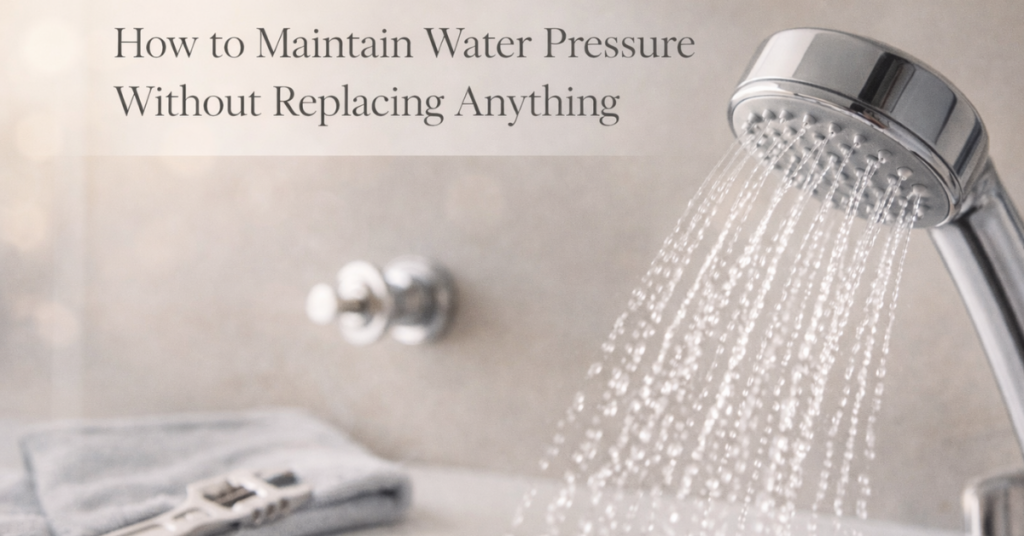
I turned on the shower one morning and felt the water fall weak.
It did not roar. It barely rinsed.
I fixed the pressure without replacing a single thing.
Quick Answer / TL;DR
In short, I cleaned what was clogged, adjusted what was closed, and balanced what was uneven. I did not buy new fixtures. I restored steady water pressure by paying attention to flow, valves, and buildup.
Table of Contents
- Intro
- Context and Definitions
- Main Body: Step-by-step Method
- Step 1: Check main valve position
- Step 2: Clean faucet aerators and showerheads
- Step 3: Flush sediment from lines
- Step 4: Inspect hidden leaks
- Step 5: Adjust pressure regulator
- Step 6: Balance usage habits
- Step 1: Check main valve position
- Common Mistakes
- Examples and Simple Templates
- FAQ
- Summary
- Call to Action
\Intro \
Water pressure felt invisible until it failed. I noticed it most in the shower, when the stream turned thin and hesitant. The house felt quieter, almost dull. I wanted strong flow again, but I did not want new pipes or costly replacements.
I learned that pressure often dropped for small reasons. Mineral buildup slowed the flow. Valves shifted slightly. Sediment collected where nobody looked. I approached the problem slowly, and the solution appeared simple.
\ Context / Definitions \
Water pressure refers to the force pushing water through pipes. It depended on supply, valve position, and internal cleanliness. It did not always require new hardware. Often, it required attention.
Low pressure felt like a weak stream or uneven spray. It could happen in one tap or across the house. When it affected everything, I checked the main supply first. When it stayed local, I inspected fixtures.
One example stayed clear in my memory. The shower slowed gradually over months. I thought the plumbing aged. In truth, the showerhead held years of mineral dust, and that was the whole story.
\Main Body\
A) Step-by-step “How To”
Step 1: Check the main water valve
What I did: I located the main shut-off valve and confirmed it stayed fully open. I turned it slowly counterclockwise until it stopped.
Why it worked: A partially closed valve restricted the entire house flow.
Example/tools: I used a simple flashlight and dry cloth.
Mistakes to avoid: I avoided forcing the valve harshly, because old metal cracked easily.
I also checked the meter valve outside. I moved carefully and wiped dirt away. Sometimes the handle shifted during maintenance without notice. That small movement reduced pressure more than I expected.
Step 2: Clean faucet aerators and showerheads
What I did: I unscrewed aerators and soaked them in vinegar. I brushed away the mineral crust gently.
Why it worked: Buildup narrowed openings and slowed flow.
Example/tools: I used a small brush and bowl of warm vinegar.
Mistakes to avoid: I avoided using sharp tools that scratched mesh.
The first time I cleaned one, I felt surprised. The mesh looked chalky and dull. After soaking, the water ran clearer. The stream felt alive again, which felt oddly satisfying.
Step 3: Flush sediment from pipes
What I did: I turned off the water heater and opened the cold taps fully. I let the water run for several minutes.
Why it worked: Sediment loosened and cleared from internal bends.
Example/tools: I used a bucket to observe clarity of water.
Mistakes to avoid: I avoided flushing when supply pressure was already low.
Sediment collected quietly over time. It sat at pipe bends like fine sand. When I flushed lines, I heard faint sputtering first. Then flow steadied, and the pressure improved slightly.
Step 4: Inspect for hidden leaks
What I did: I checked visible pipes under sinks and near appliances. I watched the water meter for movement when the taps stayed closed.
Why it worked: Leaks reduced pressure by redirecting flow.
Example/tools: I used tissue paper to detect small drips.
Mistakes to avoid: I avoided ignoring small damp spots, because they grew.
One slow leak once hid behind the cabinet. It did not flood the floor. It simply stole pressure quietly. When I tightened the joint slightly, the flow improved across the bathroom, and the house felt steady again.
Step 5: Adjust the pressure regulator
What I did: I located the pressure regulator near the main line. I turned the adjustment screw slightly clockwise.
Why it worked: Regulators sometimes drifted below optimal setting.
Example/tools: I used a wrench gently and measured the change gradually.
Mistakes to avoid: I avoided turning too far, because excess pressure damaged pipes.
I adjusted in small increments. I tested taps after each turn. The sound of water changed subtly. It sounded fuller, stronger, more confident.
Step 6: Balance household water usage
What I did: I avoided running the washing machine and shower together. I staggered heavy water tasks.
Why it worked: Simultaneous demand divided available pressure.
Example/tools: I used a simple usage schedule during peak times.
Mistakes to avoid: I avoided blaming plumbing when usage caused dip.
Pressure sometimes dropped not from damage but from overload. When the kitchen tap ran while the garden hose sprayed, the flow weakened. When I separated those tasks, pressure felt stable again.
Common Mistakes Section
Many people replaced fixtures too quickly. They assumed hardware failed. In truth, buildup caused most problems. Cleaning restored function more often than replacement.
Some ignored regulator settings entirely. They feared touching it. Gentle adjustment worked when done carefully. Panic adjustments caused new issues.
Others overlooked leaks. Small drips seemed harmless. Yet each drip reduced flow slightly. Over time, pressure weakened quietly.
Examples / Templates / Simple Checklists
Basic Pressure Recovery Checklist
I confirmed the main valve was fully open.
I cleaned all the aerators.
I flushed the lines for five minutes.
I inspected visible joints.
I tested the regulator gently.
Monthly Maintenance Routine
I rinsed showerheads briefly.
I wiped visible pipe joints dry.
I observed the meter occasionally.
I avoided chemical cleaners that corroded seals.
Simple Diagnostic Flow
If pressure dropped everywhere, I checked the main valve and regulator.
If only one tap slowed, I cleaned that fixture first.
If pressure fluctuated daily, I reviewed water usage timing.
These small routines built habits. Habit prevented sudden frustration. I learned to notice pressure changes early, before they worsened.
FAQ
Whole house pressure low
I checked the main valve and regulator first. I flushed the pipes next. I inspected the meter for a hidden leak. That sequence solved most cases.
Only one faucet weak
I cleaned the aerator thoroughly. I removed debris carefully. I reinstalled parts tightly but gently.
Pressure dropped after plumbing work
I inspected valve positions immediately. I checked if debris entered fixtures. Flushing lines usually restored normal flow.
Sudden loud banging in pipes
I reduced the regulator slightly. I ensured the valves opened slowly. Balanced pressure removed the shock sound.
Summary / Key Takeaways
- I confirmed the main valve stayed fully open.
- I cleaned aerators and showerheads regularly.
- I flushed sediment from the lines.
- I inspected for small hidden leaks.
- I adjusted the regulator carefully.
- I balanced household water use.
- I avoided replacing parts unnecessarily.
Call to Action
I restored water pressure without buying new hardware. I relied on cleaning, checking, and adjusting carefully. I approached the system with patience instead of panic. I suggested starting with the simplest step today, and moving slowly from there.