
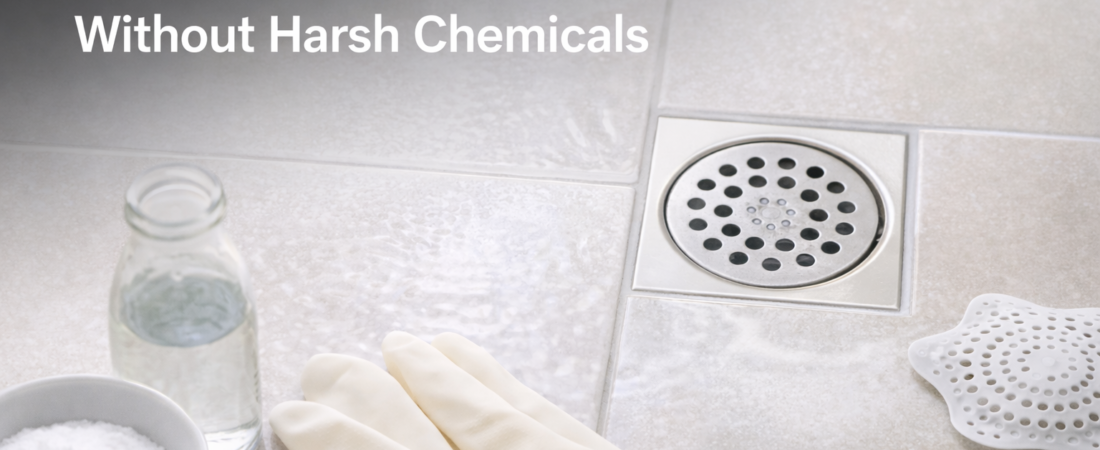
I noticed the shower water lingered around my ankles.
The air smelled damp, and the tiles felt a bit slick.
I cleaned the drain without harsh fumes or scorched pipes.
In this post I shared the exact routine I used.
Quick Answer / TL;DR
In short, I removed the hair, then I flushed it with very hot soapy water. I poured baking soda, added vinegar, and waited a few minutes. I finished with a brief plunge or a small plastic snake when the clog stayed. I rinsed well, dried the area, and the drain ran clear again.
Table of Contents
I started with a tight intro and plain definitions. I moved into a step-by-step method that stayed gentle on plumbing. I followed common mistakes that slowed progress for many people. I ended with practical templates, simple FAQ notes, key takeaways, and a calm next step.
Intro
I dealt with slow draining that quietly spoiled the bathroom mood. I cared because standing water left a sour smell behind. I wanted a method that felt safe in a small space. I kept it simple, and I kept it repeatable for a busy week.
Context / Definitions
Harsh chemicals usually meant strong caustic cleaners that burned the nose. They left a sharp scent that clung to towels and skin. I avoided them because ventilation stayed limited in my home. I leaned on mild ingredients and steady, physical cleaning instead.
A shower drain clogged for ordinary reasons, and nothing mystical. Hair twisted with soap scum and formed a soft rope in the pipe. Water slowed, then it backed up and looked cloudy on the tile. In my case, the clog sat near the top of the pipe, so it responded fast.
Main Body
A) Step-by-step “How To”
Step 1: I prepared the space and opened the drain
I turned on the fan and cracked the door open. I laid an old towel beside the shower and placed a small bowl nearby. I lifted the drain cover gently and kept the screws together. That small setup kept the mess contained and my hands steady.
Step 2: I removed hair and visible debris first
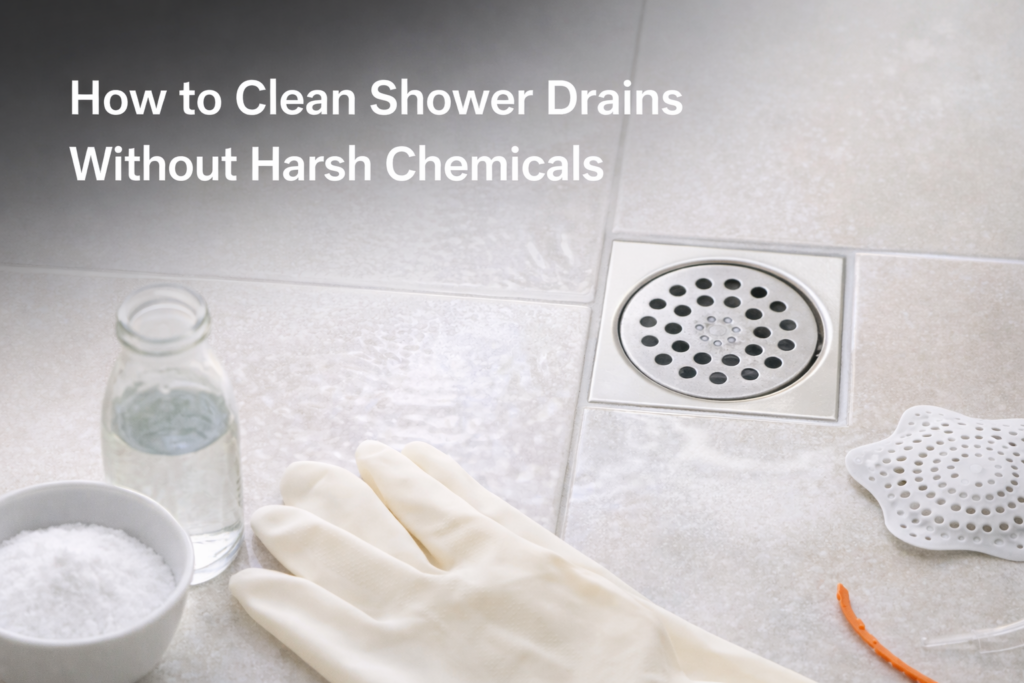
I wore gloves and used a paper towel for grip. I pulled out the hair plug slowly and dropped it into the bowl. The smell hit briefly, then it faded once the air moved. I wiped the rim of the drain with a cloth at the edge.
Step 3: I flushed with very hot water and a little soap
I heated the water until it steamed, and I poured it carefully. I added a few drops of dish soap and stirred it once. The hot mix loosened greasy film and softened the scum in the bend. I poured it into the drain in two rounds and watched the water clear.
Step 4: I used baking soda and vinegar for mild buildup
I tipped baking soda into the opening and spread it around the edges. I added vinegar slowly, and the fizz rose with a soft hiss. The reaction lifted grime and helped with odor in a gentle way. I waited about ten minutes, and the bathroom felt calmer.
Step 5: I used pressure when the drain still felt sluggish
I added a thin layer of water on the shower floor. I set a plunger over the drain and pushed in short bursts. I listened for a dull gulp, and the blockage shifted. I kept the motion controlled, because wild plunging splashed water everywhere.
Step 6: I used a small plastic snake when the clog stayed physical
I fed the plastic snake slowly and turned it a little. I felt resistance, then I hooked strands and pulled them out. That part looked unpleasant, yet it ended the clog quickly. I rinsed the tool, wiped the cover, and set everything back in place.
Step 7: I rinsed, reset, and added one prevention habit
I rinsed with hot water again and checked the flow. I cleaned the drain cover and dried it before I replaced it. I placed a hair catcher over the drain, and it trapped most strands. I emptied it after showers, and the drain stayed fresher for weeks.
“Common Mistakes” Section
I once skipped the hair removal step because I felt impatient. The fizz looked dramatic, but the drain still ran slow after. The clog stayed physical, and it needed a physical pull to leave. That lesson saved me time the next time I cleaned.
I also poured hot water too fast and splashed the tiles. The clean-up took longer, and the bathroom felt more stressful than it should. I slowed down and poured along the edge of the opening instead. That small change kept the process calm and surprisingly tidy.
Examples / Templates / Swipe Files
I kept a short routine note under the sink, and it helped. I followed it for weeks when my memory felt scattered. The habit felt boring at first, then it felt comforting. It turned drain care into a small, quiet reset.
I used this mini template when the drain started to hesitate. I removed the cover, pulled hair, and wiped the rim clean. I flushed with very hot soapy water, then I used baking soda and vinegar. I finished with a brief plunge or snake, and I rinsed well.
I used a simple shared-bathroom script when others lived with me. I said I cleaned the drain monthly and asked for basic care. I suggested the hair catcher stayed in place after showers. I thanked everyone, and the routine felt less awkward over time.
FAQ
These notes covered the concerns I heard most often. I kept them short, direct, and practical for real mornings. I stayed with the same gentle method each time. The goal stayed clear water and a cleaner smell.
A mild odor usually eased after hair removal and a hot rinse. Baking soda and vinegar helped when the pipe held soft buildup. The key was patience during the waiting time. The bathroom air felt fresher once the water flowed clean.
Slow draining often returned when the hair catcher stayed off for days. The fix started with a physical pull, not only fizz. A plunger or a small snake finished the job when needed. That pattern worked again and again for me.
Soap scum loosened best with heat and a little dish soap. The hot water softened film that clung to the bend. I avoided pouring too fast, because splashes made more work. A steady pour felt safer and cleaner.
A stubborn clog responded to gentle pressure and a careful snake. I kept the tool plastic, because metal felt too aggressive. I stopped and reset when resistance felt hard. That caution avoided damage and kept the work simple.
Summary / Key Takeaways
I cleaned the shower drain without harsh chemicals by staying simple and steady. I started with the physical blockage, then I used heat and mild fizz. I finished with a rinse and a prevention habit that actually lasted. The bathroom felt lighter, and the small win felt real.
- I removed visible hair first. That step changed everything fast. It also reduced the smell in minutes.
- I flushed with very hot soapy water. The heat softened film in the pipe. The soap helped lift the greasy layer.
- I used baking soda and vinegar for mild buildup. The fizz loosened grime without sharp fumes. The waiting time mattered more than speed.
- I used a plunger or plastic snake when needed. Pressure moved what fizz could not. The plastic tool felt gentler on pipes.
- I used a hair catcher and emptied it often. That habit prevented most clogs in advance. It kept the shower floor drier too.
Call to Action
I placed a small reminder near the cleaning supplies and followed it monthly. I kept the routine short, so it never felt like a chore. I noticed fewer smells, fewer slow drains, and less frustration. I repeated the habit, and the bathroom stayed calm.