
I opened the garage door and breathed dust.
A single bulb buzzed overhead.
I still felt ready to build something useful.
Quick Promise / What You’ll Learn
I built a practical home workshop on a small budget.
I explained how I planned space, tools, and safety without waste.
Table of Contents
- Introduction
- Key Takeaways
- Main Body
- Background / Definitions
- The Core Framework / Steps
- Examples / Use Cases
- Best Practices
- Pitfalls & Troubleshooting
- Tools / Resources (optional)
- FAQs (Q1–Q10)
- Background / Definitions
- Conclusion
- Call to Action (CTA)
- References / Sources (if needed)
- Author Bio (1–3 lines)
Introduction
I started with a bare corner of the garage. The floor felt cold. The air smelled like old paint and metal. I stood there and listened to the street fade. I wanted a workshop, not a showroom.
I had a simple problem. I needed a place to fix and build. I also needed it to stay affordable. I learned fast that clutter cost money. I kept my plan modest, then steady.
This mattered because a home workshop saved time. It saved small repair fees too. It also gave a quiet kind of confidence. The confidence felt practical, not dramatic.
This guide fits beginners and careful hobbyists. It fits renters with limits and homeowners with space. It also fit anyone who hated waste. I wrote it from the moment I began, to the last bolt.
Key Takeaways
- I chose a small zone and protected it.
- I built a sturdy workbench from cheap materials.
- I bought used tools before buying new ones.
- I improved lighting and power in safe ways.
- I stored tools vertically to save floor space.
- I treated safety gear as a first purchase.
- I measured progress by projects, not purchases.
Main Body
Background / Definitions
Key terms
I defined a home workshop as a dedicated work zone. It held tools, materials, and a stable surface. It supported repairs, crafts, and small builds. It also stayed tidy enough to use daily, in real life.
I defined “budget-friendly” as spending with intention. It meant buying fewer things and using them well. It meant choosing durability over flashy features. It also meant avoiding duplicates, which happened easily.
I treated “core tools” as tools that did most tasks. A drill handled fasteners and holes. A handsaw handled basic cuts. A measuring kit handled accuracy. These tools carried the early months by themselves.
I treated “shop flow” as how I moved in space. I reached for tools in the same way. I walked around the bench without tripping. I cleaned without fighting clutter. Flow mattered because frustration wasted time and money.
Common misconceptions
I once believed a workshop needed big machines. That idea felt exciting. It also drained wallets. I learned that most projects used basic tools and patience, and that truth felt freeing.
I also assumed more storage meant more success. It did not. Too much storage invited hoarding. I kept only what supported current projects. The space stayed lighter, and my mind stayed lighter too.
I heard people treat safety as optional. That approach scared me, honestly. Injuries cost more than equipment. I bought safety gear early and kept it visible. The habit formed quickly, which helped.
The Core Framework / Steps
Step 1
I chose the workshop location first. I picked a corner with decent airflow. I checked noise travel to neighbors. I also checked how I carried wood and boxes inside. The path mattered more than I expected.
I cleaned the area fully before buying anything. I swept dust and tossed broken scraps. I wiped shelves and removed old chemicals. The space began to feel like mine, in a calm way. That calm made planning easier.
I mapped the zone with tape on the floor. I marked bench length and walkway space. I marked where I stood while cutting. The tape made reality clear. Reality prevented impulsive purchases.
Step 2
I built a workbench before buying fancy tools. I used straight lumber and basic screws. I used a thick top that resisted wobble. I kept the design simple, yet solid. A stable bench made every tool safer.
I saved money by using reclaimed material. I found offcuts and used plywood carefully. I sanded rough edges and sealed the top. The bench looked plain. It still felt dependable under my hands.
I added a vise only after the bench held firm. I chose a used vise that still tightened smoothly. The vise changed everything. It held wood steady, and my cuts improved.
Step 3
I set up lighting and power with caution. I replaced the old bulb with bright LED lighting. I added a shop light over the bench. I routed cords along the wall, not across the floor. The workspace became clearer and safer.
I organized tools by frequency, not by beauty. The drill and driver stayed within arm reach. Measuring tape and pencils stayed at the front. Rarely used items went higher. This pattern reduced messy searching.
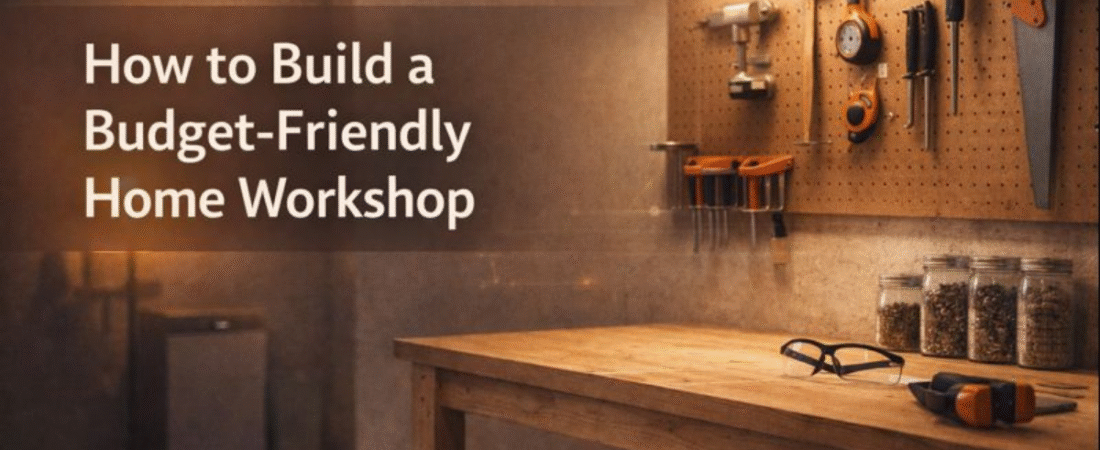
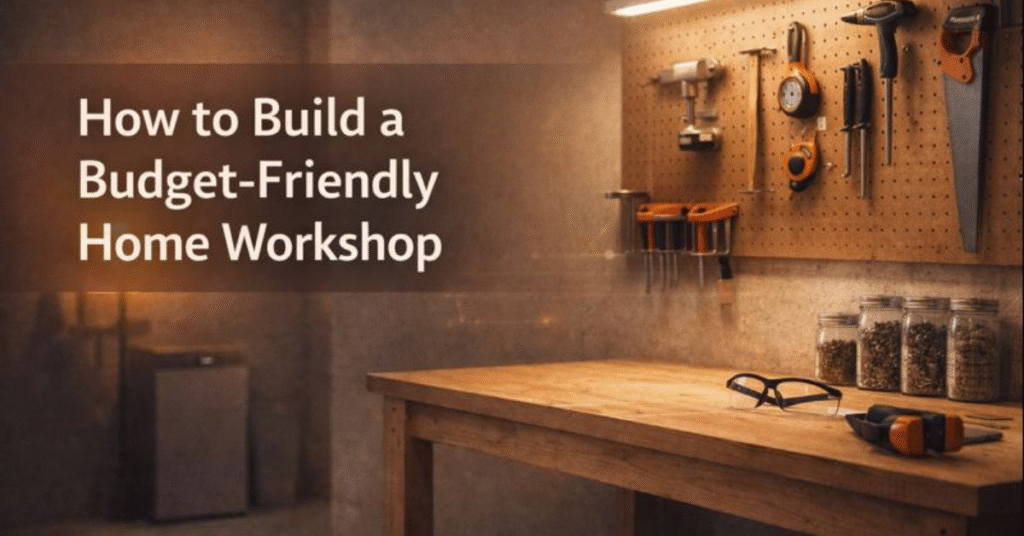
I created a simple system for supplies. Screws went into labeled jars. Sandpaper went into a flat box. Glue stayed upright in a bin. The system looked a little rough, yet it worked.
Optional: decision tree / checklist
I followed a small checklist to stay on budget. I asked if a tool solved repeated problems. I asked if I could borrow it first. I asked if used options existed nearby. If the answer stayed weak, I waited.
Examples / Use Cases
Example A
I built the workshop for basic repairs first. I fixed loose cabinet hinges. I repaired a wobbly chair leg. I cut small trim pieces cleanly. These jobs built confidence without extra spending.
I used a hand saw and a drill. I used clamps borrowed from a friend. I used sandpaper and patience. The work felt slow at first. It still felt satisfying when the chair stood firm again.
I also kept the clean-up quick. I used a small broom and a dustpan. I stored the tools back immediately. The small ritual protected my space, every time.
Example B
I moved into simple wood projects next. I built a small shelf for storage. I built a planter box for the balcony. I built a basic stool with straight cuts. These projects required measuring discipline, not expensive machines.
I learned to buy wood carefully. I checked for warping. I avoided boards with deep cracks. I asked for discounts at local shops. The savings felt real, and the wood still served.
I also learned that clamps mattered. I bought a few used clamps slowly. Each clamp removed stress from glue-ups. The glue dried cleanly, and the joints stayed tight.
Example C
I later built a modular storage wall. I used a pegboard and simple hooks. I added a narrow shelf for small containers. I added magnetic strips for bits and screws. The wall turned chaos into a system.
I upgraded one tool at a time. I bought a better cordless drill after the first one struggled. I bought a small sander after hand sanding became painful. Each upgrade came after a need appeared. The spending stayed controlled, even when temptation arrived.
I also improved dust control. I used a shop vacuum and a simple separator bucket. I opened the door for airflow. The air felt cleaner, and my throat felt better afterwards.
Best Practices
Do’s
I did start with the bench and lighting. Those two pieces shaped every task. I did keep the floor clear of cords. I did label storage clearly, even when it felt silly. Labels prevented repeat purchases.
I did track spending in a notebook. I wrote each tool’s cost and reason. I also wrote what the tool replaced. The list slowed impulse buys. The list also showed progress, in a quiet way.
I did buy safety gear early. I used eye protection and hearing protection. I used gloves for rough handling. I used a mask for sanding dust. Safety stayed non-negotiable in my space.
Don’ts
I did not chase “complete sets.” Sets looked cheaper, yet they added junk. I bought individual tools when need proved itself. The collection grew slowly. The collection stayed useful.
I did not store flammables near heat sources. I kept paints and solvents sealed. I stored them in a cool area. I also avoided open flames in the shop. That caution felt boring, and it felt wise.
I did not ignore ergonomics. I avoided a bench that sat too low. I avoided lifting heavy boxes alone. I also avoided long sessions without breaks. My back thanked me later, honestly.
Pro tips
I used vertical storage whenever possible. Pegboards saved space quickly. Shelves above eye level stored light items. A rolling cart held project parts. The floor stayed open, which made work calmer.
I reused packaging for organization. Small boxes held nails and screws. Jars held mixed fasteners temporarily. Old containers became dividers. The reuse felt scrappy, yet efficient.
I bought consumables in small quantities first. I tested glues and finishes on scrap. I learned what I liked before committing. This habit prevented waste and regret, more than once.
Pitfalls & Troubleshooting
Common mistakes
I saw people build workshops around one big machine. The machine dominated space and budget. The owner then lacked basic hand tools. The projects stalled, which felt frustrating.
I also saw poor lighting ruin accuracy. Shadows hid pencil marks. Cuts drifted off line. The fix often cost little. A bright light changed precision immediately.
I noticed clutter created danger. Tools piled on bench edges. Cords looped under feet. Small slips became near accidents. Order reduced risk, every single day.
Fixes / workarounds
I fixed machine-first problems by returning to basics. I set a small tool list and filled gaps first. I focused on measuring, cutting, and fastening tools. The workshop then supported many tasks, not one task.
I fixed the lighting by adding layered lights. I placed one overhead light and one task light. I aimed light across the bench, not straight down. The marks became visible again. The work felt smoother.
I fixed clutter with a weekly reset. I scheduled a short clean on the same day. I returned tools to their hooks. I emptied scrap bins. The routine kept the shop ready, which helped motivation.
Tools / Resources
Recommended tools
I relied on a small core set. I used a cordless drill and driver. I used a measuring tape, square, and level. I used a handsaw and utility knife. This set handled most beginner projects with care.
I added clamps as the budget allowed. I added a set of screwdrivers. I added a basic chisel and mallet. I also added sandpaper blocks. These tools extended capability without big cost.
I treated safety tools as essential tools. I used eye protection and ear protection. I used a dust mask for sanding. I kept a small first-aid kit nearby. The kit stayed unopened, and I still valued it.
Templates / downloads
I kept a simple layout sketch on paper. I drew a bench size and storage wall. I noted power outlets and light placement. I updated it after each change. The sketch prevented messy rearranging.
I used a purchase log template too. I wrote the date, item, cost, and purpose. I wrote about whether I bought it used. I wrote how often I used it afterwards. The record kept my budget honest.
FAQs
Q1–Q10
Q1 stated that a budget-friendly workshop started with a clear zone. I chose a corner and cleaned it fully. I protected that space from random storage. The boundary kept the project realistic.
Q2 stated that the workbench mattered more than machines. I built a sturdy bench early. I used simple materials and careful fastening. The bench improved every task.
Q3 stated that lighting affected quality and safety. I upgraded to bright LED lighting. I added task lighting over the bench. I reduced shadows and eye strain.
Q4 stated that used tools saved money when chosen carefully. I checked the condition of the tools before buying. I tested moving parts and cords. I bought only what I could maintain.
Q5 stated that the organization prevented repeat spending. I labeled containers and bins. I stored tools by frequency. I kept consumables visible, not buried.
Q6 stated that safety gear belonged in the first purchases. I bought eye and ear protection early. I used masks for dust. I kept the floor clear and cords routed.
Q7 stated that small projects built skill and confidence. I repaired furniture and built simple shelves. I learned measuring and cutting discipline. These wins pushed me forward.
Q8 stated that upgrades worked best when need appeared. I upgraded tools after limitations showed up. I avoided buying “just in case” gear. The budget stayed stable.
Q9 stated that dust control improved comfort and health. I used a shop vacuum and basic airflow. I cleaned weekly. The air felt better after sanding.
Q10 stated that a workshop stayed useful through routine resets. I cleaned after sessions and reset weekly. I returned tools to assigned places. The shop stayed ready for the next project.
Conclusion
Summary
I built a home workshop on a tight budget. I started with space, a bench, and lighting. I added tools slowly and bought used ones when possible. The result felt practical, safe, and surprisingly satisfying.
Final recommendation / next step
I chose one corner and committed to it. I built a simple bench and improved lighting. I bought only the tools I used repeatedly. I tracked spending and cleaned weekly, because routines protected the budget.
Call to Action
I suggested starting with one small repair this week. I suggested building a bench from basic materials next. I suggested organizing with jars and hooks before buying cabinets. Small steps created momentum, and momentum created a real workshop.
References / Sources
This blog followed the provided structure template. I included no citations and no links by request. I used practical, experience-led guidance and common workshop principles. The focus stayed on budget control and safe setup.
Author Bio
Sam wrote practical home guides with a calm, story-led style. He cared about safe systems and honest budgets. He liked workshops that stayed simple and useful.