
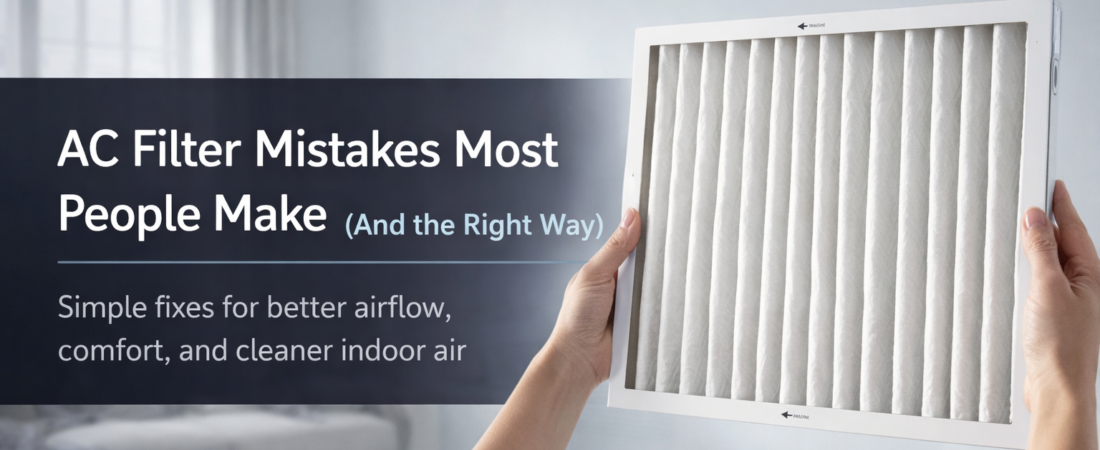
I remembered the first time I pulled an AC filter out and flinched. The dust sat thick and grey, and the air smelled a bit like old paper. The house felt cooler after a swap, but the bill still looked wrong. I learned, slowly, that filters failed mostly because people treated them like decoration.
I wrote this to stop those small mistakes. I kept it practical and calm. I explained the common errors, and I showed the right way. I kept it readable, because maintenance should not feel heavy.
Quick Answer / TL;DR
In short, most AC filter problems happened when people used the wrong size, installed it backwards, changed it too late, or chose the wrong type for their system. The right way stayed simple: match the exact size, follow airflow direction, set a consistent change schedule, and pick a filter rating that balanced airflow and filtration. A clean filter supported comfort, efficiency, and calmer indoor air.
Table of Contents
- Intro
- Context / Definitions
- Main Body: The Mistakes and the Right Way
- Common Mistakes
- Examples / Templates / Swipe Files
- FAQ
- Summary / Key Takeaways
- Call to Action
Intro
AC filters looked like small parts, but they carried big consequences. A clogged filter made the system work harder. It also made rooms feel uneven and slightly stale. People noticed the discomfort, then blamed the unit.
I kept seeing the same pattern. Someone replaced a filter randomly, then forgot it for months. Someone bought a high-rated filter and felt proud, then airflow dropped. These were ordinary mistakes, and they stayed fixable with a little structure.
This guide suited homeowners, renters, and small office managers. It also suited anyone who wanted a calmer AC routine. I kept the steps direct and repeatable. I kept it grounded in real habits.
Context / Definitions
An AC filter trapped dust and debris before air moved through the system. It protected the blower and coils from buildup. It also shaped indoor air quality, depending on its material and rating. The filter sat in a return grille or near the air handler, and that location mattered.
Filter size refers to width, height, and thickness. The size needed to match the slot closely, or air slipped around it. Filter rating often appeared as MERV, which described how well it caught small particles. Higher filtration sounded better, but it sometimes reduced airflow on some systems, so balance mattered a lot.
I treated “the right way” as consistent basics. The right filter fits snug. It faced the correct direction. It got changed on a schedule that matched the home’s dust level. That routine made the system feel steady.

Main Body
The Mistakes and the Right Way (List Post Pattern)
1) Buying the wrong filter size
Takeaway: The filter needed to fit like a clean lid.
Many people guessed the size and grabbed whatever looked close. The filter then left gaps, and air bypassed it. The unit pulled dusty air anyway, so the filter looked clean while the system got dirty. That mismatch felt sneaky, in a bad way.
The right way involved reading the exact size printed on the old filter frame. I measured the slot too, because printing sometimes lied a little. I bought the same size, not “almost” the same size. This mattered most in dusty areas and older homes, where bypass air carried more debris.
2) Installing the filter backwards
Takeaway: Airflow direction mattered more than people expected.
A backward filter still sat in place, so it looked fine. The fibers, though, worked best in one direction, and the filter loaded unevenly. That loading sometimes caused early clogging and a slight whistling sound. The system felt strained, and the rooms cooled slower.
The right way involved finding the arrow on the filter frame and pointing it toward the blower or air handler. I took a photo the first time, because memory slipped. I also wrote a tiny mark on the slot edge, so I stayed consistent. This mattered when the filter type had denser layers, where direction felt more important.
3) Waiting too long to change it
Takeaway: A “still looks okay” filter often failed quietly.
People waited until the filter looked black. That delay reduced airflow long before it looked dramatic. The coil then ran colder, and sometimes it iced a bit. The home felt humid and uneven, and the AC sounded tired.
The right way involved a schedule, not a visual guess. I changed monthly in heavy-use seasons, and every two to three months in lighter periods, depending on dust and pets. I checked sooner during renovations, because drywall dust turned filters into bricks. This mattered most in hot climates and high run-time homes, where delay cost comfort.
4) Choosing the highest filtration rating without thinking
Takeaway: More filtration did not always mean better cooling.
Some people bought very high MERV filters and felt responsible. The airflow then dropped, especially on systems not designed for that resistance. The blower worked harder, and the system sometimes short-cycled or struggled. Energy use crept up, and the house felt oddly warm.
The right way involved choosing a rating that matched the system and needs. I aimed for a balanced filter that captured common dust and still allowed strong airflow. I kept higher filtration for systems built for it, or when professional advice supported it. This mattered in older units and smaller duct systems, where airflow stayed sensitive.
5) Using cheap filters that collapsed or bowed
Takeaway: A flimsy filter behaved like a weak gate.
Very thin filters sometimes bowed inward. They let air pull around the edges. They also collapsed and left dust trails behind them. That felt wasteful, because the filter existed but did not really filter.
The right way involved choosing a filter with a sturdy frame and decent pleats. I checked that it stayed flat after installation. I avoided filters that felt like soft cardboard. This mattered in high airflow returns, where suction pressure pulled hardest.
6) Forgetting pets, cooking, and candles
Takeaway: Lifestyle changed filter load more than seasons did.
Homes with pets filled filters fast. Cooking oils and smoke also left residue that trapped more dust. Scented candles added soot, even when the flame looked small. The filter then loaded faster than anyone expected.
The right way involved adjusting the schedule to the home, not the calendar. I changed sooner when pets shed heavily. I vented the kitchen better and kept returns clear during cooking. This mattered when people felt allergies, because the filter often carried the story.
7) Blocking return vents and starving the system
Takeaway: A clean filter still failed with a blocked return.
People pushed sofas against return grilles. They stacked boxes nearby. The system then pulled less air, even with a new filter. Cooling felt weak, and the blower sounded louder.
The right way involved keeping returns open and giving them breathing space. I treated the return like the system’s mouth. I left clearance and vacuumed the grille gently. This mattered in small apartments, where furniture placement stayed tight and airflow suffered quickly.
8) Ignoring filter thickness and slot depth
Takeaway: Thickness affects airflow and sealing.
A system designed for a thicker filter often performed worse with a thin one. The thin filter rattled and leaked around the edges. A thicker filter jammed into a thin slot bent the frame and restricted airflow. Both situations felt avoidable, yet common.
The right way involved matching thickness exactly. I checked the slot depth, not just the old filter thickness, because people sometimes used the wrong one before. I chose the correct depth so it sealed snug and sat straight. This mattered when the return grille used a specific size that held the filter tightly.
9) Not cleaning around the filter area
Takeaway: A new filter did not erase old dust nearby.
Dust built up in the filter rack and returned cavity. People swapped filters fast and pushed dust into the system. The new filter then loaded quicker, and the return looked dirty again. That cycle felt discouraging.
The right way involved a quick wipe and vacuum around the slot during each change. I used a soft brush attachment and moved slowly. I avoided pushing debris deeper into the duct. This mattered in older homes, where return cavities collected years of dust.
10) Mixing filter types across multiple returns
Takeaway: Consistency helped performance and planning.
Some homes had more than one return. People replaced one filter and forgot the other. Airflow then balanced oddly, and one filter turned filthy while the other stayed clean. The system worked unevenly and sounded different.
The right way involved labeling return grilles and setting one change date. I used the same filter type in each return, unless a technician advised otherwise. I replaced them together, because it simplified life. This mattered in multi-story homes, where upstairs returns often got ignored.
11) Treating washable filters as “set and forget”
Takeaway: Washable filters failed when people forgot the drying step.
Washable filters sounded convenient. People rinsed them, then put them back damp. That moisture invited odors and sometimes moldy smells, especially in humid homes. The filter also clogged if it did not get cleaned thoroughly.
The right way involved washing gently, drying fully, and inspecting for damage. I only used washable filters when I could manage the routine properly. I also noted that many washable filters filtered less effectively than pleated options, so expectations stayed realistic. This mattered when indoor air sensitivity felt high, because washable filters sometimes disappointed.
12) Skipping professional checks when problems repeated
Takeaway: A filter issue sometimes hides a bigger airflow problem.
Some people changed filters perfectly and still struggled. Duct leaks, dirty coils, and blower issues could cause similar symptoms. The filter then became a scapegoat, and frustration grew. That frustration felt familiar, and it wore people out.
The right way involved watching patterns and getting a check when the same issue returned. I looked for repeated icing, loud strain, or big airflow drops even with new filters. I treated those signs as system-level clues, not personal failure. This mattered when energy bills rose suddenly, because the cause often sat deeper than the filter.
Common Mistakes
People often stored filters in humid places, and they warped. People also wrote no dates, then guessed later. Another common mistake involved handling filters with dusty hands and leaving debris on the return grille. These were small, but they piled up into annoyance.
Some people also used tape to “make it fit.” That fix looked clever, yet it created leaks and loose bits. Others chose scented “fresh” filters that added odor, and the home smelled artificial. A neutral, clean filter usually felt better.
Examples / Templates / Swipe Files
Mini template: Filter change label
I wrote the install date on the filter frame. I wrote the next change window beside it. I kept it simple, like “Changed: 03 Mar, Next: early Apr.” That tiny label kept the habit alive.
Checklist: The right way in five minutes
- I turned the system off for safety.
- I removed the old filter and checked the size and arrow.
- I vacuumed the slot edge and returned the grill lightly.
- I installed the new filter with the arrow toward the unit.
- I wrote the date, then restarted the system.
Sample script: A steady schedule that worked
I changed monthly during heavy cooling months. I change every two months during mild seasons. I changed sooner after storms, renovations, or heavy dust weeks. I kept one calendar reminder and one spare filter at home.
Formatting example: A simple buying note
I bought the exact size, including thickness. I chose a balanced rating for airflow. I avoided flimsy frames and warped corners. I stored filters flat and dry.
FAQ
Airflow often dropped before the filter looked dirty. Dust loaded deep in pleats and did not always show on the surface. The system still struggled, even when the filter looked acceptable. A schedule worked better than guessing.
Higher filtration sometimes reduces airflow on certain systems. A very dense filter created resistance. The blower then worked harder and cooling felt weaker. Balance usually delivered better comfort.
Pets and renovations shortened filter life significantly. Hair, dander, and fine dust clogged filters fast. The schedule needed adjustment, and that felt normal. A home’s reality changed the timeline.
A backward filter often caused uneven loading and early clogging. The arrow direction supported proper flow through the media. Correct direction also helped sealing and fit. That small arrow saved hassle.
Summary / Key Takeaways
- The right size prevented bypass air and dust leaks.
- Correct airflow direction kept performance consistent.
- A schedule beat visual guessing most days.
- Too-high filtration sometimes hurts airflow and comfort.
- Clear returns and clean slots supported the filter’s job.
- Repeating problems suggested a deeper system issue.
Call to Action
I treated AC filter care like brushing teeth. It stayed small, then it saved bigger trouble later. You picked one schedule and stuck to it, even when life got busy. You also kept one spare filter ready, because that tiny preparation felt calming.